
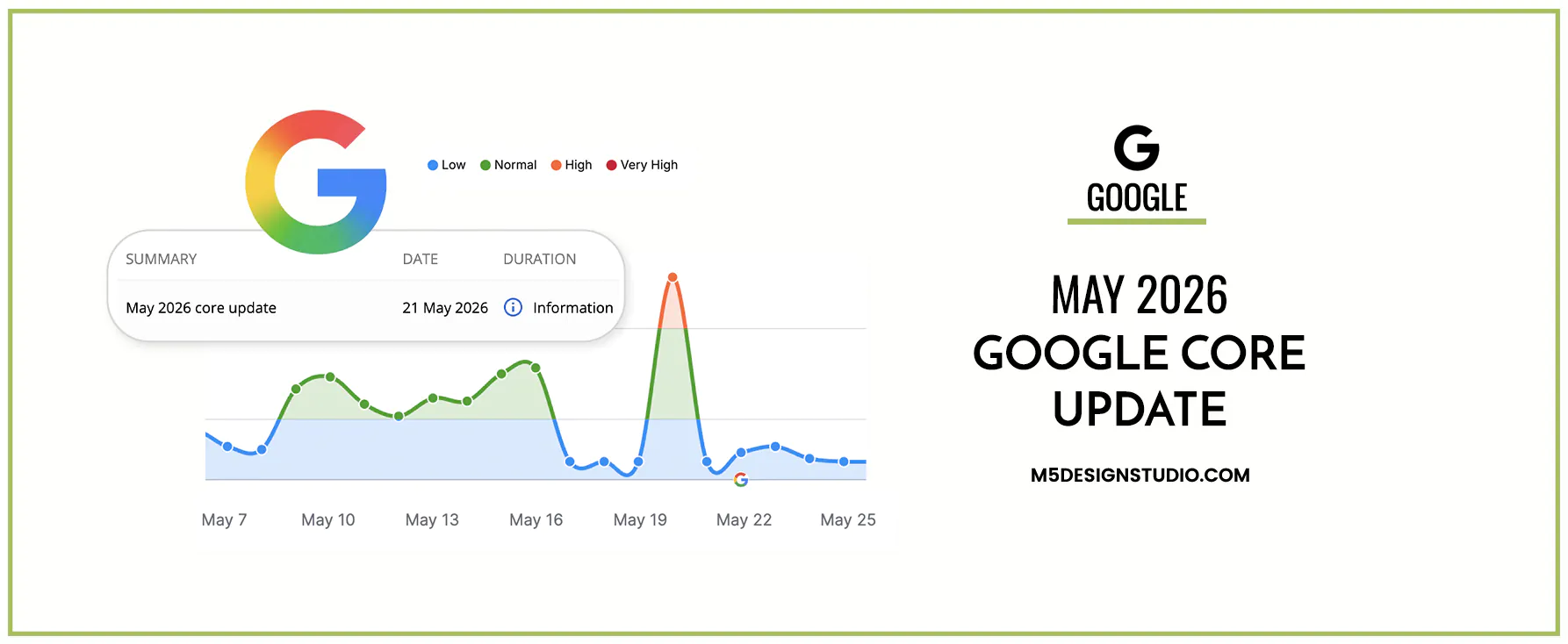
On May 21, 2026, Google launched its second broad core update of the year, and within hours, dashboards across the industry started flashing red. If your rankings shifted or your Search Console data looks off, don’t panic. What you’re seeing is likely a combination of three separate events happening at once, not a single catastrophic problem.
First, the Links report in Search Console broke for thousands of sites — some showing zero backlinks, others showing drops of 80% or more overnight. Google confirmed it’s a bug, not a real loss of links. Second, core updates cause natural ranking volatility while they roll out; the first few days are always the noisiest and least reliable. Third, Google also confirmed a logging error that had been affecting impression data in Search Console since May 2025, with a fix that only began rolling out in early April.
And all of this landed the week after Google I/O, where the company announced what it called the biggest upgrade to Search in 25 years.
In other words, this has been one of the noisiest weeks in SEO history. So if you are a business owner worrying about your backlinks or rankings, take a breath and pause; you don’t want to make a wrong move.
Here’s what’s going on. Most of what you’re seeing in your dashboard right now is not clean data. Rankings are mid-flux. The Links report is a known bug. The impression baseline you’ve been comparing against may have been inflated for nearly a year. Acting on any of it before the rollout completes and the rankings stabilize is not a good idea.
Key Takeaways on May 2026 update
Here is a quick summary of what’s going on:
- The May 2026 core update began rolling out on May 21 and is expected to finish around June 4. Do not treat rankings as stable until the rollout completes. Then wait at least one full week before analyzing Search Console and comparing against your pre-May 21 baseline.
- This is not a penalty. A ranking drop during a core update means Google re-scored content across your category, not that your site did something wrong.
- GSC impressions, CTR, and average position are noisy right now. Clicks and GA4 organic sessions are still readable signals. Use those.
- The GSC Links report is broken for many sites, showing zero or dramatically reduced link counts. This is a widely reported bug, not evidence your backlinks disappeared. Do not make link decisions based on it.
- Do not make reactive changes to content that was performing well. Mid-rollout data is incomplete. Edits made on that data rarely help and often hurt.
- Sites still recovering from the March 2026 update are being re-evaluated before they stabilized. A second dip is not automatically a second problem.
- The action checklist in this article is split in two: what to do during the rollout (monitor and document) vs. what to do after June 4 (assess and act).
- Google issued no new guidance specific to this update. The existing standard, helpful, reliable, people-first content, still applies.
Google May 2026 Core Update Summary
| Update name | May 2026 Core Update |
| Rollout started | May 21, 2026 |
| Estimated completion | Around June 4, 2026 |
| Update type | Broad core, affects all sites, all industries, all languages |
| New guidance from Google? | No. Existing helpful content standards apply |
| GSC Links report reliable? | Currently unreliable for many sites. Treat it as a reporting issue; do not react to it |
| Impression data reliable? | Historical impressions from May 13, 2025 through late April 2026 were affected by a confirmed logging error. Clicks were not affected. Use clicks, GA4 sessions, and conversions as cleaner signals |
| What to do right now | Monitor. Document your baseline. Don’t touch performing content |
| When to assess and act | After rollout completes, approximately June 4 |
At M5, we’ve been tracking this update across client accounts since it launched. We’re watching the same dashboards you are, and what we’re telling every client right now is the same thing we’ll tell you in this article: know what to monitor, know what to ignore, and know exactly when to act.
This article covers:
- What the May 2026 core update is, and what “broad core” means in plain English.
- Why your Search Console data is unreliable right now (and which data you can trust).
- What the March 2026 update tells us about what’s coming next.
- A clear, split checklist: what to do during the rollout vs. what to do after June 4.
- Google’s official self-assessment framework, translated for business owners.
If your rankings shifted this week and you’re not sure whether to panic or wait, this article is for you.
What Is the Google May 2026 Core Update?
A Google core update is a broad, system-wide change to how Google evaluates and ranks content across its entire index. Core updates are not penalties and do not target specific sites or individual pages. They are a re-evaluation of content quality signals across all sites, all industries, and all languages simultaneously.
If you have been in business long enough, you have probably seen a headline like this before: “Google releases major algorithm update.” Understanding what a core update actually means is the difference between making a smart decision this week and making an expensive one.
Why Google Issues Core Updates and What “Broad” Actually Means
A core update is not a penalty. Google is not flagging your site for a violation or punishing you for something specific you did. In Google’s own words, core updates “are broad in nature, and don’t target specific sites or individual web pages.” Google uses the analogy of a list of your 20 favorite restaurants, updated after a few years. New places opened. Your experiences shifted. A friend prefers dog-friendly spots. Some restaurants move down the list, not because they got worse, but because others now fit better. That is Google’s framing, and it sounds reasonable enough.
Here is what that analogy does not tell you.
Your restaurant did not change. Your food is the same. Your service is the same. But you just lost your table at the top of the list because Google decided to re-evaluate the whole thing, without warning, without explanation, and without telling you specifically what changed or what you need to do differently. For a neighborhood restaurant, that might mean a quieter week. For a small business that depends on Google Search to bring in customers, it can mean the phone stops ringing almost overnight.
That is the reality of a broad core update for a small business owner. Google’s description of the May 2026 update is characteristically vague: “a regular update designed to better surface relevant, satisfying content for searchers from all types of sites.” All types of sites. No specifics. No explanation of what signals changed or which industries were affected most. Just a confirmation that the whole index was re-evaluated and some sites moved.
The frustrating truth is that Google does not fully explain its ranking systems, and it never has. Sites with genuinely great content drop. Sites propped up by bought backlinks and manipulated traffic sometimes hold their positions. The system is not perfectly fair, and pretending otherwise does not help you make better decisions.
What a core update does tell you is that Google’s scoring of your content relative to competitors has shifted. Your job is to figure out the riddle; whether that is a signal worth acting on or noise worth waiting out, and that requires clean data, not panic. We will cover exactly how to read that data in the sections below.
The May 2026 Timeline and Why the March Gap Matters
Google confirmed the May 2026 core update began rolling out on May 21, 2026. The estimated completion is around June 4. But completion is not the moment to start analyzing. Google’s official guidance is to wait at least a full week after the update completes before drawing conclusions, then compare that week against a week before May 21. That comparison gives you a clean before-and-after picture. Anything measured mid-rollout will give you a distorted one.
This is the second broad core update of 2026. The first, the March 2026 core update, ran from March 27 to April 8, twelve days. That left roughly six weeks between the end of March and the start of May. For sites that dropped in March, that window was not enough time to improve content quality and have those improvements confirmed by Google’s systems before being re-evaluated again. Google’s documentation is explicit that meaningful improvements can take several months to be reflected in rankings, and in some cases may not be visible until the next core update.
Six weeks is not a lot of time. Sites still recovering from March are being re-evaluated mid-recovery, and a second dip in that context is not automatically evidence of a second, separate problem. We will cover the March pattern in detail in the next section, because it is currently the best predictor of what the May data will show once the rollout completes.
M5 Client Insight: What the March 2026 Update Looked Like From Inside a Real Account
We did not need Google to tell us the March 2026 update had started. We saw it first.
One of our professional services clients in Orlando had been holding a stable average ranking position for the last 4 years, across 210 commercial intent tracked keywords (for only one service), in a single competitive city. On March 4, before Google made any official announcement, the data in SEMrush started moving. Take a look at the behavior of one of the keywords we track.

By March 11, we have lost 55 keywords.

No manual action. No technical issues. No content violations. This was a professionally maintained site with years of consistent, white hat SEO behind it. Clean history. No shortcuts. No tricks. And it still got hit.
We are going to be honest with you: it’s hard not to worry about such a sharp drop. When half your top-3 keywords disappear in less than two weeks, it’s impossible to truly remain calm.
Here is what Google does not tell you when this happens: there is no explanation. No notification. No guidance on what specifically changed or what to fix. Just a rankings dashboard that looks nothing like it did last week. That opacity is a real problem, and it falls entirely on the business, not on Google.
We held the course and made no panic edits or reactive content changes. We checked the basics at Search Console and Google Analytics, documented the baseline, monitored the data, continued our constant high-quality SEO, and… waited for the rollout to complete.
By the end of March, when Google’s algorithm finished settling, the recovery came on its own. Average position climbed back, slightly better than where the site started. By late April, SEMrush was tracking 156 top-3 keywords, a net gain of 4 positions over the pre-update baseline, with 45 new keywords entering the top 3.

Here is why we believe the recovery happened: over years of consistent white hat SEO, this client built genuine authority the right way. When Google penalizes sites for spam, manipulated backlinks, or scaled content abuse, our clients are not in that group. They never were. A core update recalibration is painful. A spam penalty is a different category entirely, and it is one our clients do not face because we do not take shortcuts on their behalf.
The site was not broken. It was caught in a recalibration. The difference between a business that recovers and one that compounds the damage often comes down to one thing: knowing when to act and when to wait, and having an agency that has seen this pattern enough times to tell you honestly which situation you are in.
What Google’s Data Is and Is Not Telling You Right Now
The most dangerous moment after a core update is not the ranking drop. It is the decision made on bad data in the first 72 hours.
This week, Google Search Console is giving many site owners a genuinely confusing picture. Rankings are mid-flux. The Links report is broken. And the impression baseline most businesses have been comparing against for the past year was affected by a confirmed logging error. Before you act on anything you are seeing in your dashboard right now, you need to know which data is reliable and which is not.
Why Is the GSC Links Report Showing Zero Backlinks in May 2026?

The Google Search Console Links report is currently showing zero or dramatically reduced link counts for many sites. This is a confirmed reporting bug, not evidence that your backlinks disappeared.
On May 21, the same day Google’s core update began rolling out, the GSC Links report started showing errors for sites across the industry. Search Engine Roundtable reported that many site owners were suddenly seeing zero links, while others saw link counts drop by 80% or more overnight.
Google was notified and said it would investigate.
The important thing to understand is that this appears to be a reporting issue, not an actual loss of backlinks. Your link profile did not suddenly disappear.
What not to do: do not file a disavow request, do not panic-build links, and do not make any link strategy decisions based on what the Links report is showing right now. Use a third-party tool such as Ahrefs or SEMrush to verify your actual link profile if you need confirmation.
What Happened to Search Console Impression Data?
Google confirmed a logging error affected impression reporting in Search Console from May 13, 2025 through late April 2026. Clicks were not affected. Only impressions and metrics derived from impressions, including CTR and average position, were distorted during that period.
The practical consequence is significant. The impression baseline most businesses have been using for year-over-year and month-over-month comparisons was inflated for nearly a year. If your impressions appear to have dropped recently, part of what you are seeing may be the correction of that error, not a core update impact.
This does not mean your performance is fine. It means you cannot use impressions as a reliable signal right now. Clicks tell a cleaner story.
Which Data Can You Actually Trust Right Now?
Use these signals during the rollout:
Clicks in Search Console. Clicks were not affected by the impression logging error. A sustained drop in clicks on commercially important pages is a real signal worth documenting.
GA4 organic sessions and conversions. Google Analytics was not affected by the GSC logging error. If organic sessions and conversions are holding steady, that is meaningful. If they are dropping alongside GSC clicks, document it for post-rollout analysis.
Third-party rank tracking. Tools like Ahrefs, SEMrush, and Sistrix pull ranking data independently of Search Console. Use them as directional confirmation, not as authoritative truth. Results vary by crawl location, device, and sample size.
Average position. Current average position data is cleaner following the fix, but positions are still shifting mid-rollout. Use it as a directional signal only, not as a basis for decisions until the rollout completes.
Impressions and the Links report remain unreliable for the reasons covered above. Do not use either as a decision input right now.
The March 2026 Update: The Best Predictor of What Comes Next
The March 2026 core update ran from March 27 to April 8. Studying what it rewarded and what it penalized is currently the most reliable framework for understanding what the May data will show once the rollout completes.
What Did the March 2026 Core Update Reward?
The March 2026 core update consistently rewarded sites where the content creator is also the primary source of the information being shared.
The pattern that emerged across the industry was direct: businesses and individuals who own their expertise won. Aggregators, content farms, and sites that summarize other sources without adding original value lost. Google’s people-first content standard is not new, but March enforced it more visibly than prior updates.
For example a local contractor who writes about what he sees on job sites outperformed a generic home improvement site republishing manufacturer guidance. A specialist clinic writing from clinical experience outperformed a health content aggregator. The differentiator was not word count, keyword density, or technical SEO. It was whether the person writing the content had actually done the thing they were writing about. Users and Google need real data and real examples, and that is what makes the difference.
At M5, we saw this pattern directly across client accounts during the March rollout. The clients whose content reflected genuine, first-hand business experience held their positions or gained. The sites with the most exposure were those that had scaled content production without a corresponding investment in original expertise.
What This Means for Sites Still Recovering From March
If your site dropped in March and has not fully recovered, the May update is re-evaluating you before Google’s systems have had time to confirm your improvements. This matters because Google’s own documentation states that meaningful content improvements can take several months to be reflected in rankings, and in some cases may not register until the next core update.
A second dip after March does not automatically mean there is a problem. It may mean the same underlying quality gap is still being scored, and that the work you have done since April has not yet accumulated enough confirmation signal for Google to move you back up.
The priority right now is not to react to the May data mid-rollout. Stay the course on content quality improvements, document your baseline, and wait for clean post-rollout data before drawing conclusions about what March and May together are telling you.
We will cover the post-rollout assessment process in detail in the next section.
What to Do Right Now (During the Rollout)
The right response to a core update in progress is not inaction. It is disciplined, targeted monitoring combined with a deliberate pause on reactive changes.
How Do I Know If My Site Was Actually Affected?
To determine whether your site was affected by the May 2026 core update, open Search Console and look at the main Performance chart. Set your date range to the last 16 months to put the current period in seasonal context. One important caveat: the 16-month window includes the period affected by Google’s confirmed impression logging error, from May 2025 through late April 2026. That view is reliable for clicks throughout. For impressions, CTR, and average position, treat anything before late April 2026 as a potentially inflated baseline, not a clean comparison point.
Once you have that context, look at clicks and impressions together after May 21.
If both clicks and impressions dropped, yes, the core update might be involved. But that should not be your first and only answer. That is how people end up chasing the wrong problem.
It could be an algorithmic change, a technical issue or seasonality. Start with the timing, then check the Page Indexing report for anything strange. After that, look at Google Trends for your key queries. If demand dropped everywhere, your site may not be the problem.
But if impressions dropped but clicks held steady, do not immediately start rewriting titles.
Maybe your pages stopped showing for a bunch of low-value long-tail queries. Maybe fewer SERP features are being triggered. Maybe the impression correction changed what “normal” looks like. The only way to know is to go into the queries that lost impressions and see what actually changed.
If clicks dropped but impressions stayed steady, you might pay attention to that. But even then, do not treat it as automatic proof that rankings fell.
Lower rankings can cause it, sure. But so can AI Overviews pushing organic results down the page. So can more ads. So can new SERP features taking the click before users ever reach you. So can competitors with better snippets. And sometimes search intent shifts just enough that the old click pattern stops making sense.
Here is where you have to do the data-heavy work. Check queries, pages, countries, and devices. Then look at the live SERP for the terms that matter most.
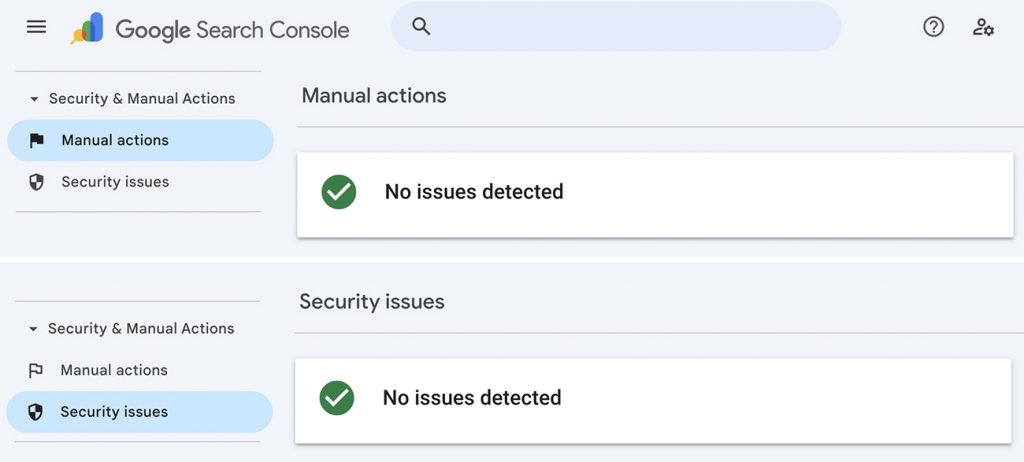
Before concluding the drop is algorithmic, Google’s own debugging guidance recommends ruling out two other causes first. Check the Manual Actions report in Search Console to confirm there are no spam violations. Check the Security Issues report to confirm there are no malware or phishing flags. If either report shows an issue, that is a separate problem from the core update and requires a different response entirely.
The 3-Question Self-Check Before You Touch Anything
If you have confirmed a click drop that correlates with May 21 and no manual actions or security issues are present, run this check before making any changes:
Is the rollout still in progress? Check the Google Search Status Dashboard. If the update has not completed, rankings are still moving. Any baseline you measure right now is not a stable baseline.

Is the drop large or small? Google’s guidance is specific here. A small drop, for example moving from position 2 to position 4, does not warrant drastic action. Small fluctuations happen continuously, it is normal, and they can reverse without any intervention. A large drop, for example falling from position 4 to position 29, warrants a deeper assessment. Treat these two scenarios differently.
Is this pattern site-wide or page-specific? A site-wide drop across dozens of pages points to a broader content quality signal. A drop concentrated on one or two pages points to something specific about those pages. Check the Pages table in your Search Console Performance report, sort by Clicks Difference, and identify where the losses are concentrated.
What Not to Touch Right Now
Google’s guidance on this is direct: avoid making radical changes to pages that are already performing well. The instinct to rewrite, restructure, or delete content mid-rollout is understandable but rarely productive. You are editing against incomplete data, and changes made now cannot be properly evaluated until the dust settles.
Specifically:
- Do not rewrite pages that were ranking well before May 21.
- Do not make structural changes to navigation or internal linking.
- Do not delete content sections in response to a traffic dip.
- Do not make link strategy decisions based on the current Links report.
The one exception is planned improvements you were already executing before the update launched. Reactive edits triggered by mid-rollout data should wait.
What to Do After the Rollout Ends (Around June 4)
How to Read the Post-Rollout Data Correctly
Once Google posts the official completion notice on the Search Status Dashboard, wait at least one full week before drawing conclusions. Then build your comparison using two clean windows: a week after completion against a week before May 21. That is the before-and-after picture Google’s own documentation recommends.
When you open that comparison, analyze search types separately. Use the Search Type filter in Search Console to look at Web Search, Google Images, Video, and the News tab independently. A drop in one area does not mean the whole site is down.
Where the decline happened matters. A loss in Images can point to one issue. A loss in Web Search can point to another. News and Video have their own patterns too. So the fix should match the search type that actually changed.
Set the date range to the last 16 months and compare what you are seeing now with the same period last year. If your traffic usually dips in May and starts coming back in June, that changes the story.
It may be seasonality, not the core update.
Then look at the pages table sorted by Clicks Difference. Identify whether the losses are site-wide or concentrated. A site-wide pattern points to an overall content quality signal. A concentrated pattern points to specific pages that need a closer look.
How to Assess a Large Drop Using Google’s Framework
If your analysis confirms a large, sustained drop in position across important pages, Google’s guidance is to self-assess your site as a whole, not just the individual pages that dropped. The self-assessment asks whether your site overall is delivering content that is helpful, reliable, and people-first.
Does your content provide original information, reporting, or analysis that is not simply a restatement of what other sources have already published? Would a real expert in your field read your pages and find them satisfying and complete? Does the content reflect genuine first-hand experience with the subject? Would someone bookmark it, share it, or return to it?
If the answer to any of those is no, then Google is scoring whether your content genuinely serves the person reading it.
For a large drop, Google recommends:
- Avoiding quick-fix changes based on “black hat” or unethical SEO.
- Focus on improvements that make sense for your users and are sustainable long term.
- Deleting content is a last resort and should only be considered if the content cannot be meaningfully improved.
Finally, set realistic expectations on the timeline. Real improvements may take effect after months of constant SEO. Your long-term goal should be to produce helpful content; this way, traffic, engagement, and conversions will follow.
May 2026 Google Core Update Frequently Asked Questions
Did the May 2026 Core Update Penalize My Site?
You will have to assess that after the rollout finishes. The May 2026 core update is a broad re-evaluation of content quality signals across Google’s entire index that does not target specific sites.
If your rankings dropped, it could be temporary while the rollout happens. If the rankings remain down after the update, it means other pages were re-scored as a better match for certain queries, not necessarily that your site did something wrong. Google’s own documentation is explicit: “most sites don’t need to worry about core updates and may not even realize one has happened.” If you dropped, the path forward is a content quality assessment, not a penalty recovery process. Check your Manual Actions report in Search Console to confirm there is no manual action present. If there is none, this is a core update impact.
Why Is My Google Search Console Showing Zero Backlinks in May 2026?
The GSC Links report is showing zero or dramatically reduced link counts for many sites because of a confirmed reporting bug that began on May 21, the same day the core update launched. This is not evidence that your backlinks disappeared.
Do not make any link-building or disavow decisions based on what the Links report is showing right now. Use a third-party tool such as Ahrefs or SEMrush to verify your actual link profile until Google resolves the issue.
Should I Update My Content During the Google Core Update Rollout?
No. Do not make reactive content changes during the rollout. Google’s guidance is direct: avoid making radical changes to pages that are already performing well. Changes made against mid-rollout data are changes made against an incomplete picture.
If you have content improvements that were already planned and in progress before May 21, those can continue on their normal schedule. Edits triggered specifically by what you are seeing in Search Console this week should wait until after the rollout completes and you have a clean baseline to work from.
When Will the May 2026 Core Update Finish?
The May 2026 core update is estimated to complete around June 4, 2026, approximately two weeks after it began on May 21. Monitor the Google Search Status Dashboard for the official completion notice.
Update: The May 2026 Google Core Update Is Complete
Once it posts, wait at least one full week before analyzing your data and drawing conclusions.
My Site Dropped in March and Again Now. Do I Have a Bigger Problem?
A second ranking drop after March 2026 does not automatically mean a second or larger problem. Sites still recovering from March were re-evaluated before Google’s systems had time to confirm their improvements, and a second dip in that context may reflect the same underlying quality signal, not a new one. Google’s documentation states that meaningful content improvements can take several months to register, and in some cases may not be visible until the next core update. Six weeks is not several months.
Do not left behind the content improvements, document your baseline, and wait for clean post-rollout data before drawing any conclusions about what March and May together are telling you.
What Does Google Actually Want From My Content?
Google wants content that is helpful, reliable, and created for people first. That standard has not changed with this update. Content should provide original information beyond what other sources have published, reflect genuine first-hand experience, and fully satisfy the reader’s question.
The full self-assessment is available at Google Developers: Creating Helpful Content.
Conclusion
This has been one of the loudest weeks in search in a long time. A core update, two Search Console data issues, and a wave of Google I/O announcements all hit at once. So yes, the noise is real. But the noise is not the signal.
Google is re-evaluating content quality across the index. The sites most likely to benefit are the ones showing real expertise, original insight, and actual value for the people reading them. That standard has been the direction of search for years. What changes with each update is how strongly Google enforces that standard.
If your rankings shifted this week, don’t make changes based on messy mid-rollout data. Instead, follow a simple process:
- Document where things stand now.
- Wait for the rollout to finish around June 4 (The May 2026 Google Core Update Is Complete)
- Give the numbers another week to settle before drawing any major conclusions.
If the numbers still show a large, sustained drop after that, use Google’s self-assessment framework and look at where your content may be thin, outdated, generic, or less useful than the pages now outranking you. Then focus on improvements that genuinely help your readers, and give Google time to recognize those changes.
At M5, we are monitoring this update across client accounts in real time. We will publish a follow-up analysis when the rollout completes with what the data is showing across industries.
Need help uncrypting Google’s May 2026 update?
If your rankings shifted this week and you want someone who is watching the same dashboards to review your specific situation, that is exactly what our free SEO evaluation is for. An honest read of your website’s health and a clear answer on whether this is something to act on now or wait out.
If you need help, we are here for you. Book a free SEO consultation.
References:
- Google Search Central -Core Updates Documentation developers.google.com/search/docs/appearance/core-updates
- Google Search Central – Creating Helpful, Reliable, People-First Content developers.google.com/search/docs/fundamentals/creating-helpful-content
- Google Search Central – Debug Google Search Traffic Drops developers.google.com/search/docs/monitor-debug/debugging-search-traffic-drops
- Google Search Central – Data Anomalies in Search Console support.google.com/webmasters/answer/6211453
- Google Search Status Dashboard status.search.google.com
- Google Search Ranking Updates List status.search.google.com/products/rGHU1u87FJnkP6W2GwMi/history
- Google Search Central – A Guide to Google Search Ranking Systems developers.google.com/search/docs/appearance/ranking-systems-guide
- Google Search Central – Guidance on Using Generative AI Content developers.google.com/search/docs/fundamentals/using-gen-ai-content